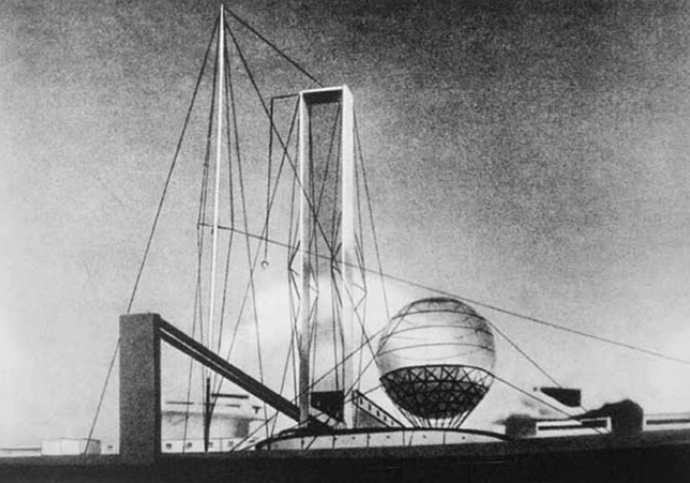
Constructivism

Constructivist architecture was a form of modern architecture that flourished in the Soviet Union in the 1920s and early 1930s. It combined advanced technology and engineering with an avowedly Communist social purpose. Although it was divided into several competing factions, the movement produced many pioneering projects and finished buildings, before falling out of favour around … Read more
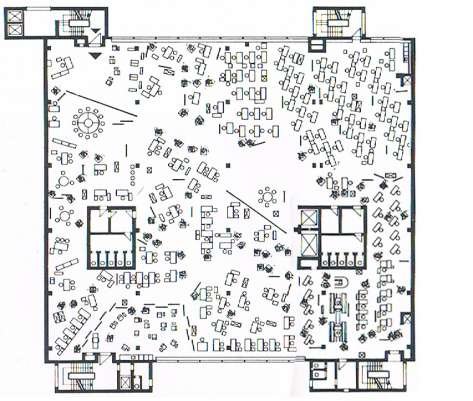
burolandschaft

Office landscape (German: Bürolandschaft/Großraumbüro) was an early (1950s) movement in open plan office space planning that typically used irregular geometry and organic circulation patterns. HistoryThe general European mentality towards innovative forms of office design in the 1940 and 1950s was that of caution and hesitation following the devastating effects left from WWI and WWII. Before … Read more

Metabolism

Metabolism was a post-war Japanese architectural movement that fused ideas about architectural megastructures with those of organic biological growth. It had its first international exposure during CIAM’s 1959 meeting and its ideas were tentatively tested by students from Kenzo Tange’s MIT studio. During the preparation for the 1960 Tōkyō World Design Conference a group of … Read more

Futurism

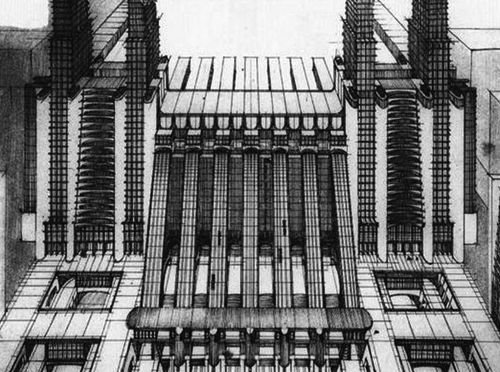
Futurist architecture is an early-20th century form of architecture born in Italy, characterized by strong chromaticism, long dynamic lines, suggesting speed, motion, urgency and lyricism: it was a part of Futurism, an artistic movement founded by the poet Filippo Tommaso Marinetti, who produced its first manifesto, the Manifesto of Futurism, in 1909. The movement attracted … Read more

Brutalism

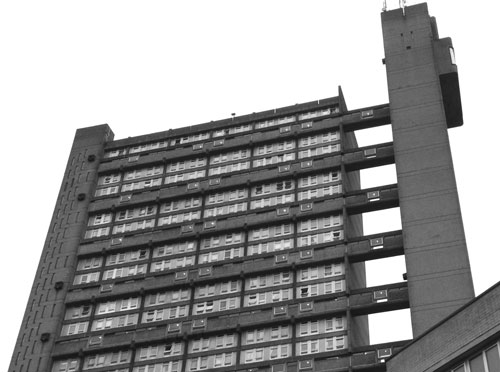
Brutalist architecture flourished from 1951 to 1975, having descended from the modernist architectural movement of the early 20th century.[1] The term ‘Nybrutalism’ (New Brutalism) was originally coined by the Swedish architect Hans Asplund in 1950 to describe Villa Göth in Uppsala.[2] Architects Alison and Peter Smithson introduced the term “Brutalism” to the English-speaking world in … Read more

Structuralism

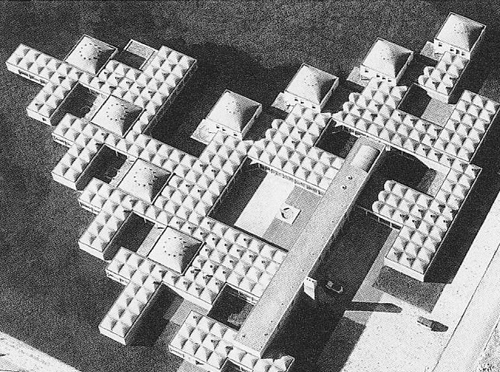
Structuralism is a movement in architecture and urban planning evolved around the middle of the 20th century. It was a reaction to CIAM-Functionalism (Rationalism) [1] which had led to a lifeless expression of urban planning that ignored the identity of the inhabitants and urban forms. Structuralism in a general sense is a mode of thought … Read more

Suprematism

Suprematism (Russian: Супремати́зм) is an art movement, focused on basic geometric forms, such as circles, squares, lines, and rectangles, painted in a limited range of colors. It was founded by Kazimir Malevich in Russia, around 1913, and announced in Malevich’s 1915 exhibition, The Last Futurist Exhibition of Paintings 0.10, in St. Petersburg, where he, alongside … Read more